
Silverblade in the news: “The ad industry is bracing for a spending downturn.”
Silverblade Partners attended the annual ANA Financial Management Conference, this past May in Orlando.
During her keynote, Kristen Cavallo, the outspoken CEO of The Martin Agency, cited 120-day payment terms as a new pain point in the advertising procurement process. At Silverblade, we believe this means that the entire ad media supply chain is about to experience even slower payments in 2023.
If your company is facing down 120-day payment terms, find out how to take control of the problem now.

by: Ryan Joe, Lara O'Reilly, and Lucia Moses at Business Insider
“Here’s how marketers like McDonald’s are shifting budgets and who’s likely to benefit the most.”
“I don't think the real cutting has begun and the cutting will be sporadic when it occurs,” Bernard Urban, CEO at Silverblade Partners, a finance company that works with advertising agencies and media companies. “Having lived through the early 2000s recession in a senior role at a global agency, we saw spend shift more so than cut," Urban said. "Don't get me wrong, there were many cuts and some downsizing, but a lot of spend shifted around and we were busy accommodating these shifts.”
120 Days: Taking Control of Extended Payment Terms
Silverblade Partners attended the annual ANA Financial Management Conference, this past May in Orlando.
During her keynote, Kristen Cavallo, the outspoken CEO of The Martin Agency, cited 120-day payment terms as a new pain point in the advertising procurement process. At Silverblade, we believe this means that the entire ad media supply chain is about to experience even slower payments in 2023.
If your company is facing down 120-day payment terms, find out how to take control of the problem now.
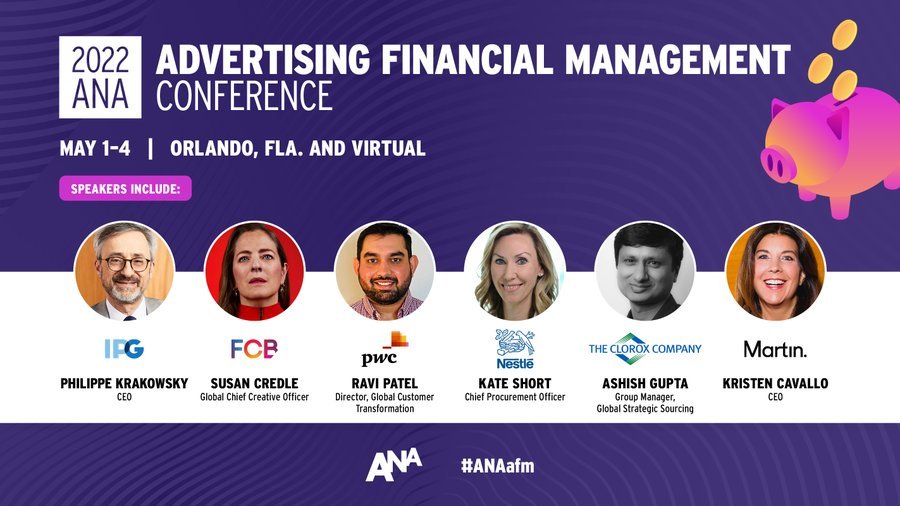
Notes from the recent ANA Advertising Financial Management Conference: 120 days can be a long time.
The ANA held its annual Financial Management Conference, May 1st - 4th in Orlando, Fl. and Silverblade Partners attended. As always, the ANA staged a spectacular series of talks on trenchant and timely topics and it was truly exciting to meet with our peers in person after such a long time.
One moment that stood out, conspicuously to us, was that during her keynote, Kristen Cavallo, CEO of The Martin Agency, cited 120-day payment terms as a new pain point in the advertising procurement process — in fact, she made a very big deal about it during the Q&A at the end of her presentation. At the break following the presentation, several attendees approached our CEO, Bernard Urban, to point out how Silveblade has always been one step ahead on this important topic.
What does this mean for adtech, media, and publishing companies? Certainly by now, everyone knows the story of how Coty famously asked for 150-day terms when they shopped their media business back in 2015. And how brands like Macy’s asked for 120-day terms at the beginning of the pandemic. It seems the practice is becoming more commonplace and this most certainly means that the entire ad media supply chain is about to experience even slower payment.
At Silverblade Partners we have seen the trend accelerating — and that’s why when we say we advantageously finance the media supply chain to close the payment gap, what we mean is that we understand the credit implications and can turn extended terms into a beneficial scenario — in fact, our strategy of proactively extending credit to 120+ days is driving 2-3x incremental revenue for our clients.
Want to know more? Find out how to take control of extended payment terms now.
Disruptive Strategic Credit

What happens when payment terms are advantageously stretched to 120+ days?
In an industry where accounts recievable routinely performs close to 90 days, what happens when media companies offer brands and agencies 120+ days terms. For clients of Silverblade Partners, the result is exponential net revenue growth. Silverblade is actively arranging advantageously extended credit terms — a game changing win/win for our media clients and the brands and agencies they work with.
Find out how strategic use of credit will deliver disruptive ROI for your media company.

Media Finance Outlook Q4 - Q1
“There’s enough momentum from advertisers wanting to spend the last of their 2021 ad budgets to enter next year with some momentum. Whether that can be sustained throughout 2022 remains to be seen.” — Digiday, Nov 15th.
Executive Summary:
While the Delta Variant had the world tapping the brakes last quarter, now the Omicron Variant has taken its place. Travel is expected be impacted moreso than with Delta. Economic outlook into 2022 shows increased usage of the word “stagflation” as inflationary indicators continue alongside indications of slower growth. For now, interest rates remain stable into 2022.
Indicators of Strength:
“Global credit conditions in 2022 are poised to stabilize, although with stark differences across regions and economic sectors, Moody's Investors Service said in a new report. Steadying economic activity, supported by progress in vaccinations against COVID-19, will drive enhanced credit quality of debt issuers overall.”
— Moody's, “Research Announcement: Global credit conditions to stabilize in 2022, but COVID-19 related challenges remain.”
Indicators of Weakness:
“Many organizations are incorporating continued inflation into their plans and strategies for next year.”
— by John O’Rourke, Financial Executives International“As supply-chain disruptions continue, we've lowered our U.S. GDP growth forecast to 5.5% for 2021 and 3.9% for 2022 (from 5.7% and 4.1%, respectively). Despite the slowdown, GDP is still likely to rise to a 37-year high in 2021, with solid readings for 2022, on continued economic demand from healthy balance sheets.”
— S&P Global Ratings, “Economic Outlook U.S. Q1 2022: Cruising At A Lower Altitude.”
The Two Biggest Mistakes Adtech, Media, and Publishing Companies are Making with Strategic Finance.

In the last 20 years advertising media has shifted to a real-time trade, yet the cashflow moves slower than most other sectors. The disconnect goes back over 100 years to the earliest days of the business, based on how the industry is fundamentally structured. Still, the problems related to this disconnect remain industry-wide — and many agree these problems are not possible to solve on a systemic level. 45-days to well over sixty 60-days are inherently normalized payment terms.
The holy grail then is matching the velocity of the money to the new, high-velocity of the commerce in an efficient way that optimizes: cost of capital, scalability, and risk management. Basically, how to deliver real-time payment for real-time media trade.
As strategic finance specialists in the sector, our team consistently see two common mistakes occurring from previous finance decisions that work against these optimal conditions:
Mistake #1: Deploying capital raised from equity to finance OpEx.
When a media company closes a venture round, goes public with a SPAC, or takes on an equity investment from private equity, the general mindset is that the company is now efficiently liquid. The mistake then is to allocate a portion of those funds to finance OpEx to float the outstanding accounts receivable. Given an average of 60-day payment terms, this means a sizable portion of the new liquidity will be locked-up to service the A/R and now will be performing at market interest rates for short-term borrowing. This money will not be working as hard as it is intended.
To ensure growth, money raised from equity performs best when strictly allocated to CapEx — to finance M&A and investment in strategic growth (infrastructure, technology, etc.) — not to finance day-to-day operations. CapEx investment generally delivers a higher ROI based on asset amortization and increased enterprise valuation.
The consequences of using equity to finance OpEx are slower growth, diminished ROI, and ultimately, disgruntled equity investors. This approach is the corporate equivalent of a consumer taking out a HELOC to take the family on vacation.
Mistake #2: Relying on an ABL facility from a bank.
While an ABL from a reputable bank may seem like an obvious solution — it is a proven tool to solve OpEx liquidiy — these facilities are inherently a bad fit for the advertising media industry.
For starters, the risk profile of media A/R does not typically align with a traditional bank ABL facility. 60-day accounts receivable terms make banks nervous; while 60-75 days is the normal performance in the media industry. Blue-chip clients who pay invoices in 150 days? Forget it. Also, most ABLs include a variety of restrictive covenants and hidden fees. Attractive interest rates quickly become unwieldly when the fees are unpacked and factored into the interest.
Most importantly, these facilities don't scale efficiently, if at all. Sign a big new client and need access to an incremental 15% of overall credit? This is highly unlikely given that facility was initially drafted at the largest possible size.
Other serious downsides to this approach are broken covenants, a diminished borrowing base, and impaired credit.
Working with an experienced partner who understands these challenges not only avoids and corrects these mistakes, it delivers a new level of benefits.
Trade finance is a critically important tool that underpins the flow of goods and materials around the world. It’s a proven practice for managing liquidity, routinely employed by some of the world’s largest companies.
The use of trade finance in the technology services and media industry is a relatively nascent practice, but quickly gaining favor as a preferred way to manage liquidity. Apple, Inc. is well known for using various forms of trade finance — including A/R invoice purchases. Yet Apple has a significant stockpile of cash. Why doesn't it use its cash reserves to finance these transactions? One can argue that Apple’s savvy use of trade finance, protects those cash reserves.
Correcting the issues that can arise from the two critical mistakes outlined above requires a strategic finance partner with the experience to work with closely with senior management, advisory board members, and the managers of existing partner banking relationships. When a media company aligns with the right trade finance resource, not only are liquidity problems resolved, but the company enjoys other important benefits, including better relationships with both suppliers and clients — with clients enjoying more favorable terms and higher credit limits, while suppliers get paid on time, or even early.
Media Finance Outlook Q3 - Q4
“Outlook where a significant proportion of the population has already been vaccinated… is significantly better than for others. Expected global GDP growth has been revised upwards (+5.6%), due to positive surprises from the US.— Coface “BAROMETER” July 21, 2021.”
Executive Summary:
The Delta Variant has the world tapping the brakes — especially related to international travel — while the outlook on inflation remains cautious. Interest rates remain stable into 2022, extending the window for locking in low rates for borrowing. The global supply chain continues to experience severe disruption, which will likely continue through 2022.
Indicators of Strength:
“We’re tightening up things before we even get [to the fourth quarter]. It’s going to be a really tight market throughout this entire year,” said an executive at a second TV network.
— by Tim Peterson, Digiday
Indicators of Weakness:
“Factories and service providers report sharply slower growth due to the Delta variant and troubles in hiring, shipping.”
— by Josh Mitchell and Paul Hannon, WSJ
Media Finance Outlook Q2 - Q3
“Since the beginning of 2021, the balance of surprises has tilted towards the positive, despite the still numerous health uncertainties. — Coface Economic Research Team, “BAROMETER” April 27, 2021”
Executive Summary:
Inflation continues to be the main focus as the year progresses. Travel media spending will likely take until 2022 to fully recover. Optimism builds in the US as vaccinations take hold.
Indicators of Strength:
— Jeremy Siegel, Wharton
“Many economists, along with the Federal Reserve, expect the jump in inflation to be temporary, but others worry it could persist even once reopening is complete.”
— By Gwynn Guilford and Sarah Chaney Cambon, The Wall Street Journal
Indicators of Weakness:
“Airline traffic is growing again, but the industry still faces turbulence. The number of travelers passing through Transportation Security Administration checkpoints on March 12 reached 1.36 million, the highest count since the early days of the pandemic. But that’s little more than half the number of TSA screenings done on the same day two years ago (2.50 million), before COVID.”
— By Bradley Johnson, AdAge
Media Finance Outlook Q1 - Q2
“Overall sentiment is bullish, with a number of large media accounts in review this year. Increases in spending from hospitality and travel could arrive in late Q2 as those sectors inch forward.”
Executive Summary:
Expectations of inflation loom as the US economy is primed to expand 6.5 percent in 2021, which could bring about a rise in rates. All indicators are aligned with advertising media spending forecasts for 2021; roughly 3.5% fueled by growth in digital and streaming. Activity around ABL finance facilities is increasingly strong while rates remain low.
Indicators of Strength:
Indicators of Weakness:
Media Finance Outlook Q4 - Q1
“We are seeing ‘green shoots’ — conversations include expectations of growth in 2021. What’s driving the demand for capital is less about weathering the Covid-19 storm and more about expectations of increased demand.”
Executive Summary:
While interest rates are forecast to remain low, risk related to loan defaults is rising. Q4 onto Q1 will likely perform close to normal levels with strength building after Q1 in 2021. New corporate debt facilities could come with higher costs of capital associated with elevated risk profiles.
Indicators of Strength:
Indicators of Weakness:
Silverblade in the News: “Finance is the new marketing…”
by Lara O’Reilly at Digiday
Back in March as the coronavirus crisis was rapidly taking a grip around the world, I wrote that “finance is the new creative” as CFOs were forced to seek new liquidity avenues to prevent their businesses from facing a cash crunch. Now — for a handful of ad tech companies at least — finance has become the new marketing.
“It would take a significant injection of liquidity into a problematic landscape in order for [early payments] to truly be a trend,” said Bernard Urban, CEO at Silverblade, a company that offers accounts receivable financing solutions to advertiser and media clients. “I think there’s a lot of treading water going on and once the waves get a little rougher treading water is going to be harder to do.”
Silverblade in the News: “‘The money is just not showing up’: Digital media companies are likely to wait even longer for payments”
by Lara O’Reilly at Digiday
Payment terms are stretching longer and late payments are becoming more prevalent in the digital media industry — trends that were already on the rise even before the coronavirus crisis hit.
“As everyone starts getting busier around the year end, trying to create a normal Q4, there will be less dry powder in the pipeline and more demands on operational resources,” Urban said. “When you go to hit the accelerator and there’s no gas in the tank, that’s when we’ll see how bad it is.”
Silverblade in the News: SSPs Are Taking Extra Steps to Assure Publishers They’ll Get Paid
by Andrew Blustein at Adweek
In a recent poll of publishers, 16.1% cited challenges with “accounts payable” as their biggest barrier to conducting business as normal in a time when liquidity is hard to come by, and now supply-side platforms are doing all they can to endear themselves to parties with such concerns.
Bernard Urban, CEO of Silverblade Partners, a financial solutions… firm, said the company mainly served the ad-tech sector when it launched last August. However, many publishers have started coming his way in search of liquidity since the outset of the pandemic. “We’re in an environment where money moves at an average of 60-90 days, so [a lot of] money moving through the system is before-Covid-19 money. I don’t think the full impact of the liquidity crunch has hit yet.
Silverblade in the News: Finance is the New Creative: “Ad Businesses... Seek New Liquidity Avenues”
By Lara O’Reilly at Digiday.
First came the shock. Then came the bills.
Eager to maintain a positive free cash flow as the coronavirus crisis enters a new month, every publisher or agency CFO is looking to prioritize two things: 1) Ensuring clients pay up any outstanding bills as quickly as possible. 2) Moving fast to pare down bills flowing out from their own businesses — or finding ways to kick those cans down the road.
“‘Agency and publishing businesses tend to be reactionary and ebb and flow with client demand,’ said Bernard Urban, CEO at Silverblade, a company that offers accounts receivable financing solutions to advertiser and media clients. ‘Unfortunately, in the case of a black swan event like this… your options become more limited.’”

Silverblade in the News: Payment Terms are Under Fire in Advertising Media and AdTech
Adweek is reporting “third-party revenue platforms for publishers are quietly revamping their payment processes.”
“At a time when everyone is looking for liquidity, I’d encourage all CFOs to be as forward-thinking as possible.” Bernard Urban, Silverblade Partners, CEO
Silverblade: A/R Lending for Publishers and Advertising Media
Bernard Urban, CEO, Silverblade Partners, investigates the complexities of debt facilities in the media space where money moves like molasses and nonbank lenders are entering the game at an increasing rate in this column for ABF Journal.

In 2017, Greenwich Associates published a white paper entitled “Trade Finance: A Market Eager for Disruption,” which made the case that while technology is a primary driver of disruption in the space, companies are also experimenting with alternative nonbank providers in various parts of the trade finance value chain.
Ad Age Magazine estimates total spending on global advertising in 2020 to be over $700 billion. The U.S. remains the largest single global advertising market, with $246 billion in spending. The primary source of those dollars is Fortune 1000 companies with investment-grade credit ratings.
Advertising media is an increasingly complex ecosystem and money moves though it slowly. As of 2020, approximately 7,000 ad tech companies exist in North America alone. In 2018, eMarketer reported that payment terms of 90 days were increasingly common. Further, at that time, outliers reported terms stretching beyond 120 days. According to Moody’s, most companies in their Media and Publishing Sector coverage carry debt rated speculative.
The nexus of these two dynamics — the growth of alternative nonbank providers and the slow moving cashflow through the expanding global advertising ecosystem — is the focus of this discussion.
The Inadequacies of Status Quo Strategies and Tactics
For the CFO of a private, midsize ad firm, factoring for A/R is generally a tactic of last refuge. Many CFOs prefer a line of credit secured against A/R as a strategic finance cornerstone. The two primary consideration factors are cost of capital and impact on staff workload. An A/R secured line of credit has versatile utility to cover gaps in payment terms and address other appropriate financing needs the company may face. Or will it?
An A/R secured LOC used to cover extended payment gaps of 90 days or more, will in most cases eventually be inadequate. Depending on credit worthiness, the LOC against A/R will generally carry a debt to income ratio of 25% to 40% — a rate that carries little cushion, especially if other financing needs come into play. As a reference: Diageo is known to use payment terms of 120 days. Starbucks is known for 100-day terms. Coty once famously asked for 180-day payment terms when shopping for an agency to handle its $1 billion media account.
Other considerations that come with LOC facility are lien rights and non-subordination. Covenants in the LSA will likely limit other permitted indebtedness making it necessary to refinance or consolidate the LOC with a term loan secured against IP or other equity.
Realistically, at some point that A/R secured line of credit will be inadequate and exhausted. At this point, factoring becomes the next most attractive tactic to facilitate liquidity. With a timeline of 30 days to fund — sometimes less than a week — factoring presents as a practical solution. Cost of capital related to factoring is variable, and it can rise dramatically over short periods of time. Another consideration is the fact that what brought a company to this tactic is a negative credit event — an exhausted line of credit — which will likely increase the cost of capital. And cost of capital is further driven up by long payment terms, 90-days brings exorbitant rates and invoices beyond 90 days are often classified as uncollectible, even if the obligator is Starbucks.
If factoring is treated more like a swingline loan, the cost of capital can be better managed, but that brings added human capital requirements — it just creates more work. Generally disruptive to what are usually small finance teams, factoring can include demands added to employee workload such as daily reporting. The media finance workflow usually involves the settlement of discrepancies, which can already be a time intensive process, so daily reporting is not a welcome addition.
For larger companies, commercial paper becomes a prescient option. However, it is not easy to write CP in the advertising media space. For example, prior to merging with CBS, Viacom, with $12.8 billion in revenue and a credit rating of Baa3, had no commercial paper on the street. Does this mean Viacom was a candidate for factoring? Probably not. Certainly, Viacom had access to liquidity, just likely at a higher cost than might be readily assumed.
The most currently accepted and widely used model looks like this — source the strongest terms for the largest available A/R backed LOC and when that taps out, turn to factoring and hope for the best.
Imagining Better — Alternative Facilities and Innovative Solutions
Technology has turned advertising into an always-on firehose of transactions and data — this is the new normal as advertising transforms into a real-time, data-driven industry. Billing, however only occurs once every 30 days. The value of accessing liquidity in the unbilled transactions prior to those 30 days is significant. Using the energy industry as an archetype, there is an innovative opportunity to unlock value in unbilled receivables, or accrued billing, for digital media. Lines of credit or factoring cannot effectively do this.
Recognizing that a significant portion of the $700 billion flowing through the advertising ecosystem originates at companies with investment-grade credit, such as Starbucks, Diageo, and Coty, another opportunity to innovate new kinds of financing tools better suited to the needs of the players in the space exists. Factoring generally doesn’t recognize accounts receivable outside of 90-day terms, severely handicapping its utility in the space, without even considering the cost of capital.
These opportunities will ultimately be addressed by a new breed of alternative nonbank providers that can deliver this with a healthy respect for the bandwidth limitations of the staffing of the ad-tech and publishing finance teams. With this in mind, in the near future, imagine that a more useful and versatile mix of borrowing for the ad-media sector might look like this: a form of a new kind of A/R finance at a fixed rate secured against A/R, paired (if necessary) with a term-loan facility secured against IP or other equity. This represents a likely path to lowest overall cost of capital with unlimited flexibility. It’s a different way — a more strategic and less tactical way — of thinking.
For a CFO, choosing the right approach at the right time is critical. But more importantly, they must be aware of all the options at their disposal and think more than one step ahead.
The Future of Advertising is Finance
With deep respect to great creative, trenchant strategy, and flawless execution, the future of advertising isn't any of these things. They are the ghosts of advertising past. And big data, alternative service models, and AI are not the future either. They are the ghosts of advertising present.
The future of advertising is finance.
Reduction of the financial friction between the brand and the agency and acceleration of the velocity of the cashflow will be the primary driver in moving large chunks of client business going forward.
WPP won't meet their own shareholder expectations and manage the new realities that P&G is implementing without having a firm handle on how to maximize how the money flows. No amount of any other tricks in the agency playbook will even come close. Sure a cheeky Super Bowl campaign makes for great cocktail party conversations; but ultimately the balance sheet is where the score is tabulated for brands today.